Protection
Watch protection film vs DIY kits: is professional fitting worth it?
What comes in a DIY watch film kit, why edges lift and dust shows, what a professional fitting adds, and when a kit is a perfectly sensible choice.
· 7 min read · By Jason
A DIY kit can protect a flat, simple surface such as a clasp well enough, if you have patience and a clean, dust-free space. For curved cases, lugs and full bracelets, professional fitting is usually the better choice, because those are the surfaces where home-fitted film tends to lift and show.
What comes in a DIY kit
A DIY kit is a set of pre-cut film pieces made for a particular watch reference, usually cut by machine from a digital template. Along with the film, most include something to clean the watch with and a set of instructions.
Prices depend on how much of the watch the kit covers. At the time of writing, UK sellers charge around £50 for a clasp-only set and around £70 for a half set covering the clasp and case sides. Full sets that include every bracelet link cost more.
Kits exist mainly for the most popular references, so a less common or older watch may not have one. A case that has been polished will also have lost a little metal, so a template made from a new watch may not sit exactly right.
The hard parts: curves, lugs, bracelets and dust
Curves
Film comes flat, and very little of a watch case is. Case sides and bezels curve in more than one direction, and film stretched to follow them pulls back at the edges. The film maker Garware lists "excessive tension during application" among the causes of lifted edges, and notes that curved and recessed areas "can also make proper film adhesion difficult".
Lugs
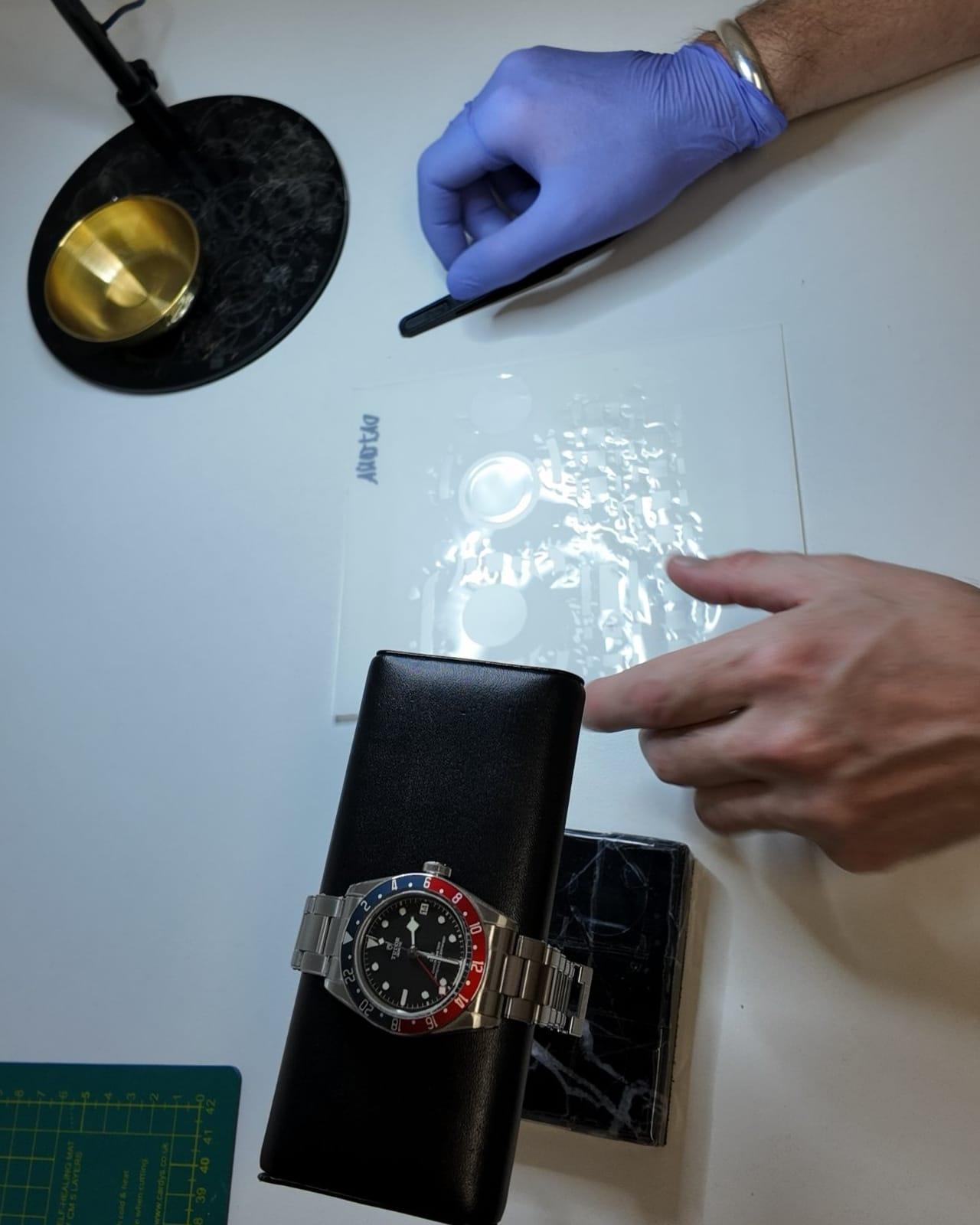
Lugs are small, sharply shaped and usually finished with a polished bevel. The edge of each film piece needs to sit just inside that bevel line. A millimetre too far and the edge wraps over the corner, where it catches on sleeves and starts to peel.
Bracelets
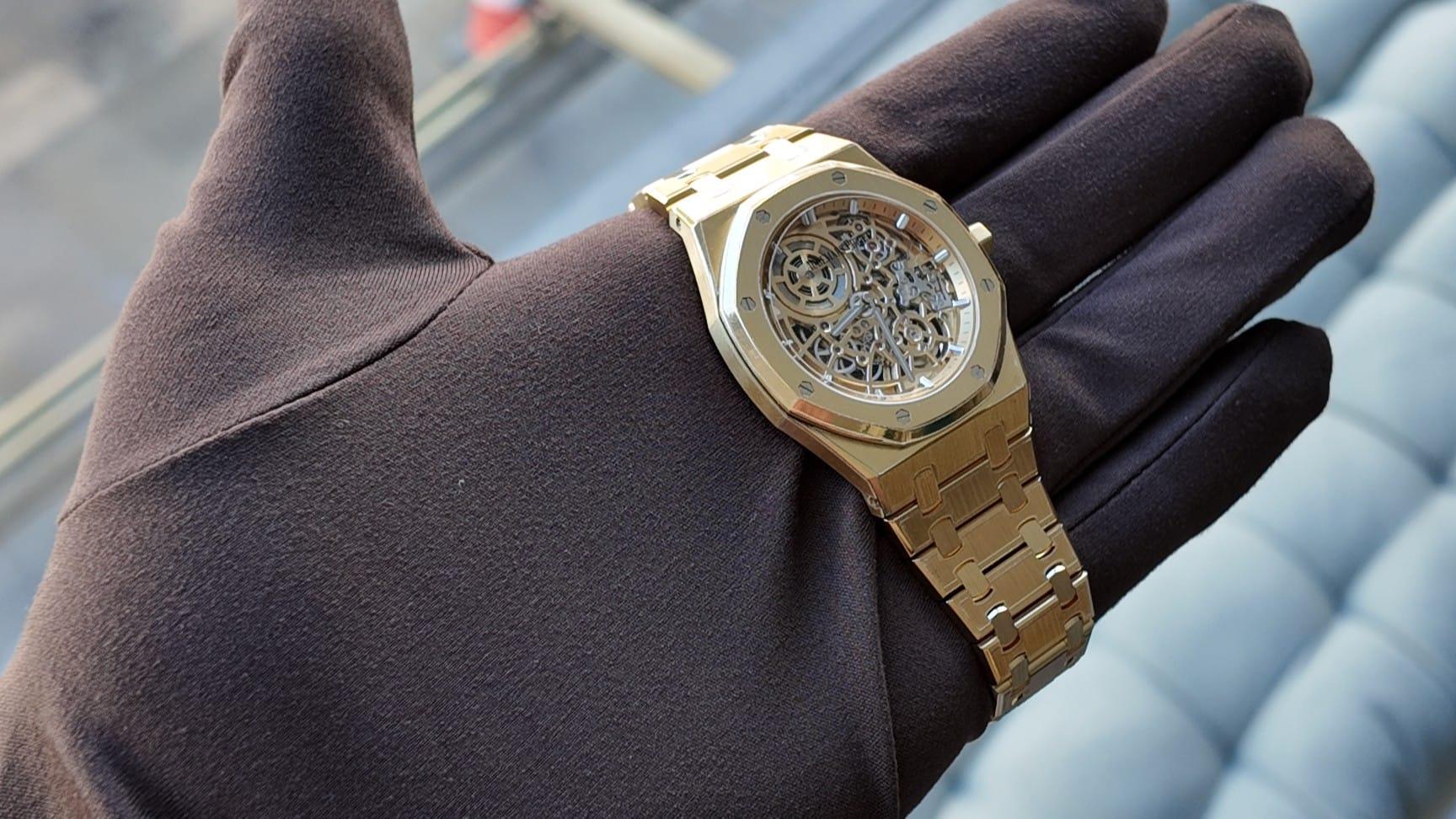
A full bracelet means many separate pieces, one for each visible face of each link. On an integrated bracelet, such as the one on an Audemars Piguet Royal Oak, almost every link has its own polished bevels. One crooked piece among dozens is the one you will notice every time you look down.
Dust
Mirror-polished steel shows anything trapped beneath the film, and a single speck of dust becomes a raised dot with a halo of air around it. Garware notes that trapped moisture can fade while the film settles, but particles "will not disappear during the curing period".
Common DIY problems
Lifting edges
A lifting edge usually starts at a corner on a curved surface, or anywhere the metal was not completely clean. Once an edge lifts, dirt collects under it, a grey line appears, and the piece usually needs replacing.
Bubbles and trapped dust
Small air bubbles often show on polished links and the flat of the clasp. Some can be pushed out at the time, but trapped dust cannot, and on mirror polish it is easy to see.
Misaligned cuts
Even a perfectly cut piece can go on a little off line, leaving an edge across the join between brushed and polished steel, or a strip of bare metal. Lifting a piece to reposition it risks picking up dust from the air and your fingers.
What a professional fitting includes
At Wrist Guard LDN, every fitting follows the same three stages.
Measure
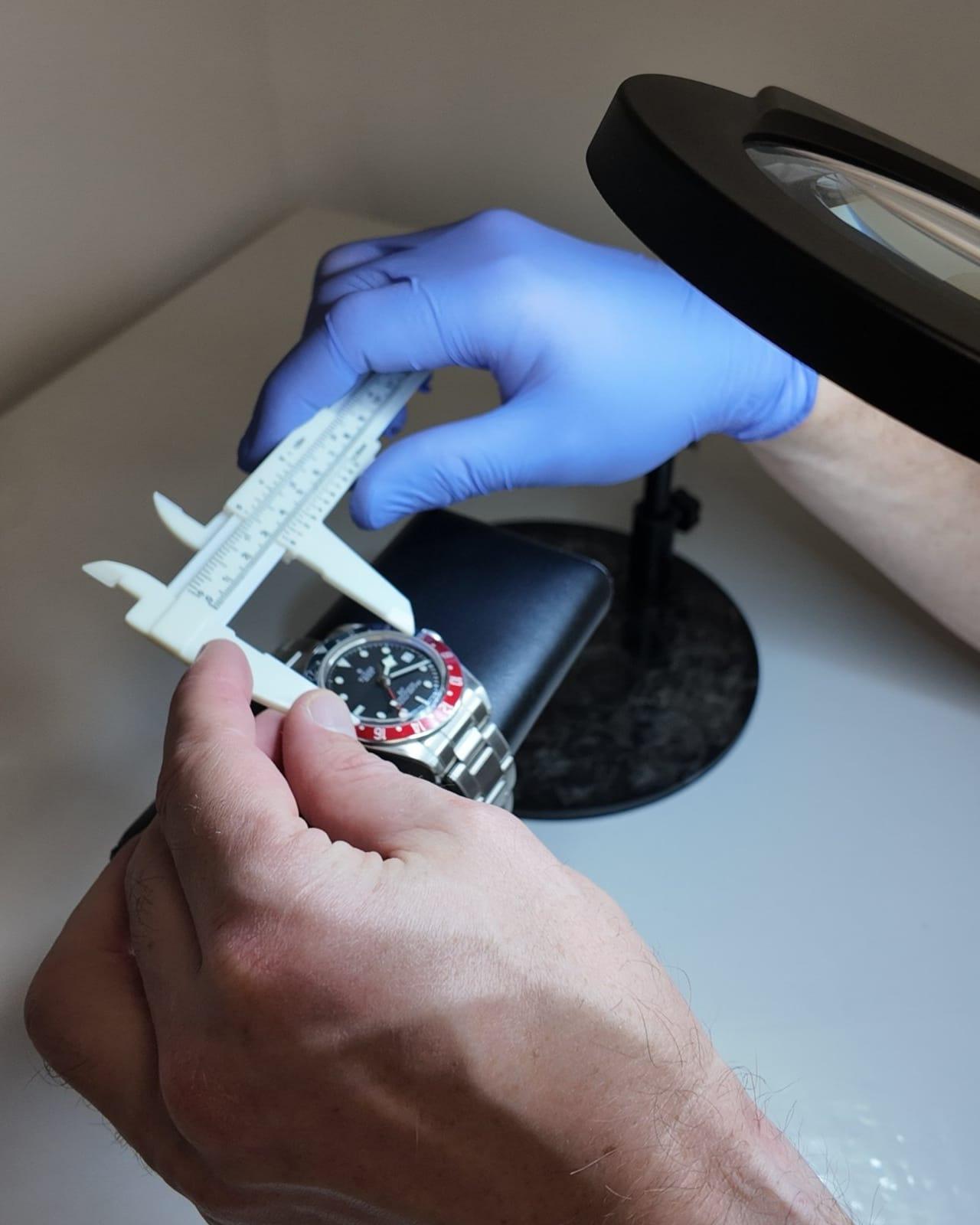
We measure every surface of your watch with callipers before cutting, so the pieces fit your watch rather than a generic template.
Cut
Each piece of film is cut to the exact profile of the case, bezel, clasp and links, with every edge set just inside the line of the metal, which keeps it hard to see and stops edges catching.
Fit
We clean and prepare each surface, fit the film by hand one surface at a time, then check every edge under a loupe before the watch goes back in its box. A fitting takes from 30 minutes to an hour or more, depending on the watch and how complex its case and bracelet are. We have honed the process over many watches, so it is efficient, but we never work to the clock.
Every fitting comes with our six-month guarantee: if any film we fitted lifts, peels, marks or wears in that time, we re-fit or replace it free of charge. See our services page for details.
Cost compared over two years
Both routes depend on your watch and how hard you wear it, so here is how the costs build up.
On a watch worn regularly, film typically lasts 12 to 24 months before the busiest surfaces need a fresh piece, so over two years plan for one full fitting and at least one partial re-fit either way.
With a DIY kit:
- the kit itself, priced for your reference
- replacement pieces or a second kit, if a piece lifts or is spoilt during fitting
- a further kit when the clasp and links wear through
- your own time, which for a full watch is considerable
With a professional fitting:
- the fitting, quoted for your watch and the parts you want covered
- free re-fits for anything that lifts, peels, marks or wears within six months
- after that, a re-fit charged only for the part that needs it, with small repairs often costing much less
For a clasp alone, a kit is almost always cheaper, even if you buy a second one. For a full watch, the gap narrows once you count replacement pieces and re-fits.
When DIY is fine, and when to get it fitted
A kit is a reasonable choice when:
- you only want to protect the clasp, which is flat and easy to line up
- the watch has mostly brushed surfaces, which hide small flaws far better than polish
- a good kit exists for your exact reference, and you are happy to take your time
- you want to try film before deciding whether to protect the whole watch
Professional fitting is worth it when:
- the watch has large areas of polished steel, gold or platinum
- you want the bracelet, case sides and lugs covered, not only the clasp
- your reference has no kit, or the case has been polished before
- you plan to sell one day and want the case kept original (here's why)
If a kit you fitted has started to lift, we can remove it and fit fresh film. For how the film itself works, read watch protection film explained.
Frequently asked questions
Can I fit watch protection film myself?
Yes. A patient owner can fit a pre-cut clasp piece well at home. Work in a clean room with still air, wash your hands, clean the surface thoroughly and line each piece up before it touches the metal. Curved case sides, lugs and polished bracelet links are much harder, and that is where most people choose professional fitting instead.
Why do the edges of my watch film keep lifting?
Usually because the surface was not perfectly clean, the film was stretched to fit a curve, or the edge sits over a corner where it catches on clothing. Once an edge has lifted, dirt gets under the adhesive and it rarely stays down again. The lasting fix is to replace that piece with one cut to sit just inside the edge of the metal.
Is a DIY kit cheaper than professional fitting?
For a clasp alone, yes, almost always. For a full watch, the difference is smaller than it first looks once you count spoilt pieces, replacement kits as the film wears, and your own time. A professional fitting also comes with a six-month guarantee, so if anything lifts or peels in that time, the re-fit is free.
Will a DIY kit damage my watch?
The film itself should not. Good film sits on top of the metal and lifts away cleanly, as ours does, with no residue. The risk comes from the fitting. Applicator cards, fingernails and tools can mark polished steel if grit gets trapped between them and the surface. Clean the watch and the tools first, and work slowly with light pressure.
Enquire about your watch
Tell us your watch and which parts you would like protected, and we will reply with a quote and appointment options. You can visit our Hatton Garden studio, arrange a collection, or book a home visit.
Prefer to message? WhatsApp us on +44 7913 157321 and we will reply the same day.
Written by Jason, co-founder of Wrist Guard LDN, who looks after every client from their first message to the moment their watch goes back on the wrist.