Protection
Does watch protection film affect resale value?
Why condition decides what a watch sells for, what dealers check first, and how protection film keeps the case and bracelet original until the day you sell.
· 7 min read · By James
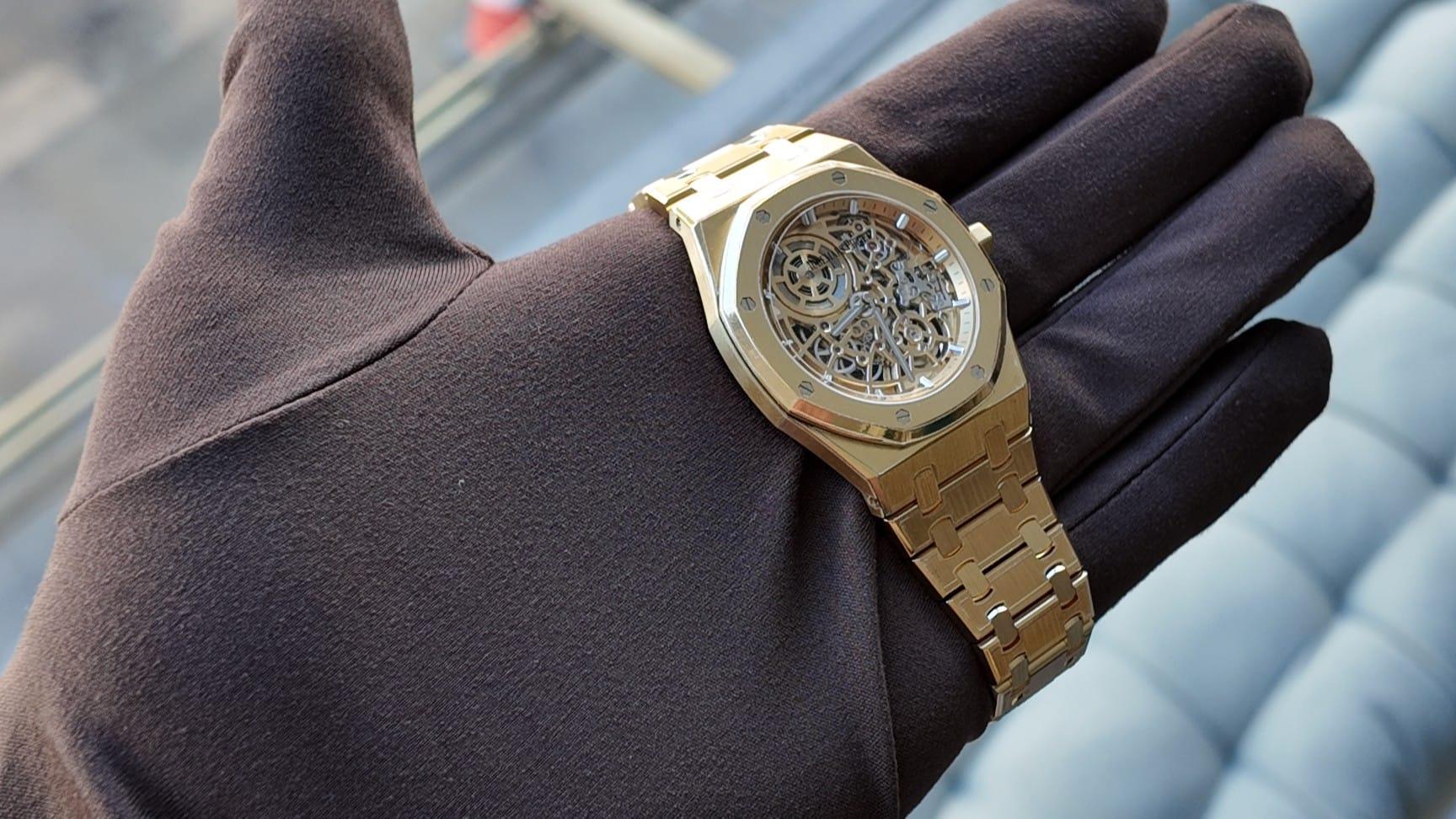
Fitted and removed properly, protection film leaves no trace on a watch. By taking the everyday scratches, it helps keep the case and bracelet in the original, unpolished condition that buyers pay most for.
Why condition matters so much when you sell
Two watches of the same reference, from the same year, can sell for very different sums. Most of the gap comes down to condition. Sotheby's guide to assessing watch condition puts it simply: "condition is king", and good condition means a watch close to how it looked when it was first sold.
For a modern steel sports watch, that mostly means the outside. The movement can be serviced and the crystal replaced. The metal of the case and bracelet is the one part that cannot be renewed, only refinished, and a refinish takes some of it away.
A listing photographed in good light shows every hairline on a clasp, and a buyer who has to factor in a polish will offer less.
What dealers check first
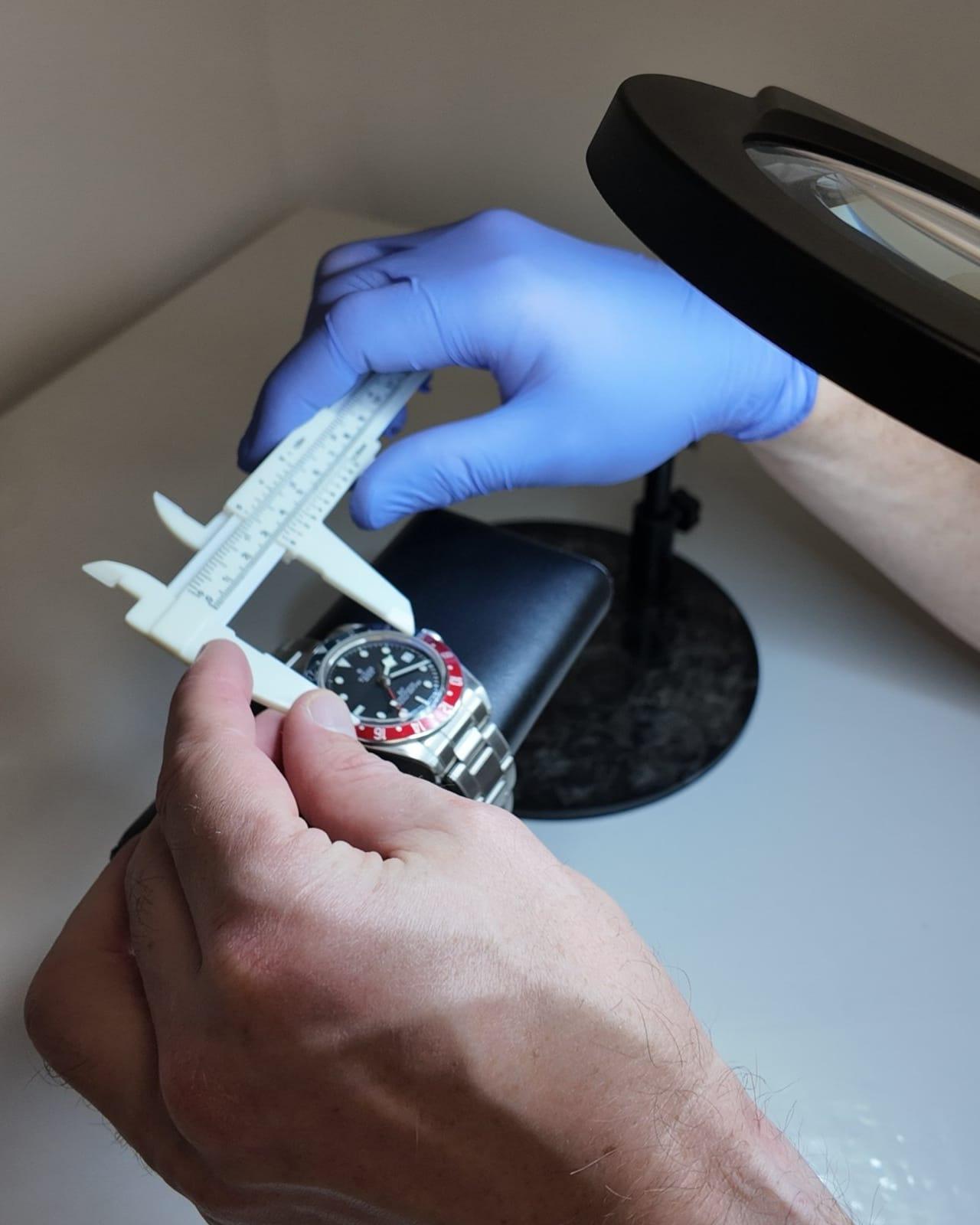
When you take a watch to a dealer or an auction house, they will look at it under a loupe before they talk about money. In our experience the order rarely changes.
The case and lugs
The case sides and lugs show a watch's history more honestly than anything else. Sotheby's notes that "the lugs are usually the giveaway", because it is very hard to polish a watch without changing their proportions. Sharp, crisp edges where the polished and brushed surfaces meet suggest the case has not been touched.
The bracelet
A dealer will hold the watch by the case and let the bracelet hang. A bracelet that sags or twists has worn at the pins, and polished centre links show swirl marks quickly. Both are signs of a watch that has been worn hard.
The clasp
The clasp sits flat on desks and laptop palm rests all day, so it is usually the most scratched part of any watch worn to the office. It is also the first thing many buyers turn over to look at.
Polish history
Finally, they will look for signs that the watch has already been polished. Rounded bevels, soft edges and engravings or hallmarks that look shallow all point to a previous refinish. Sotheby's describes the sharp bevels of polished vintage sports watches becoming "muddy" or disappearing altogether.
Polishing vs protecting: why fewer polishes matters
Polishing removes scratches by removing metal. As the Sotheby's guide explains, a thin layer is taken off to get below the marks. Done well and rarely, it can make a watch look fresh again. Done often, it slowly changes the shape of the case.
Once a bevel has been rounded or a lug made thinner, there is no way to put the metal back, which is why collectors ask how many times a case has been refinished.
Rolex's own servicing procedure says the middle case, bezel, case back and bracelet are re-polished or satin-finished "on request", and the retailer notes your requests when you hand the watch in. If you want to keep the original finish, say so at that point, and check the estimate before you approve it.
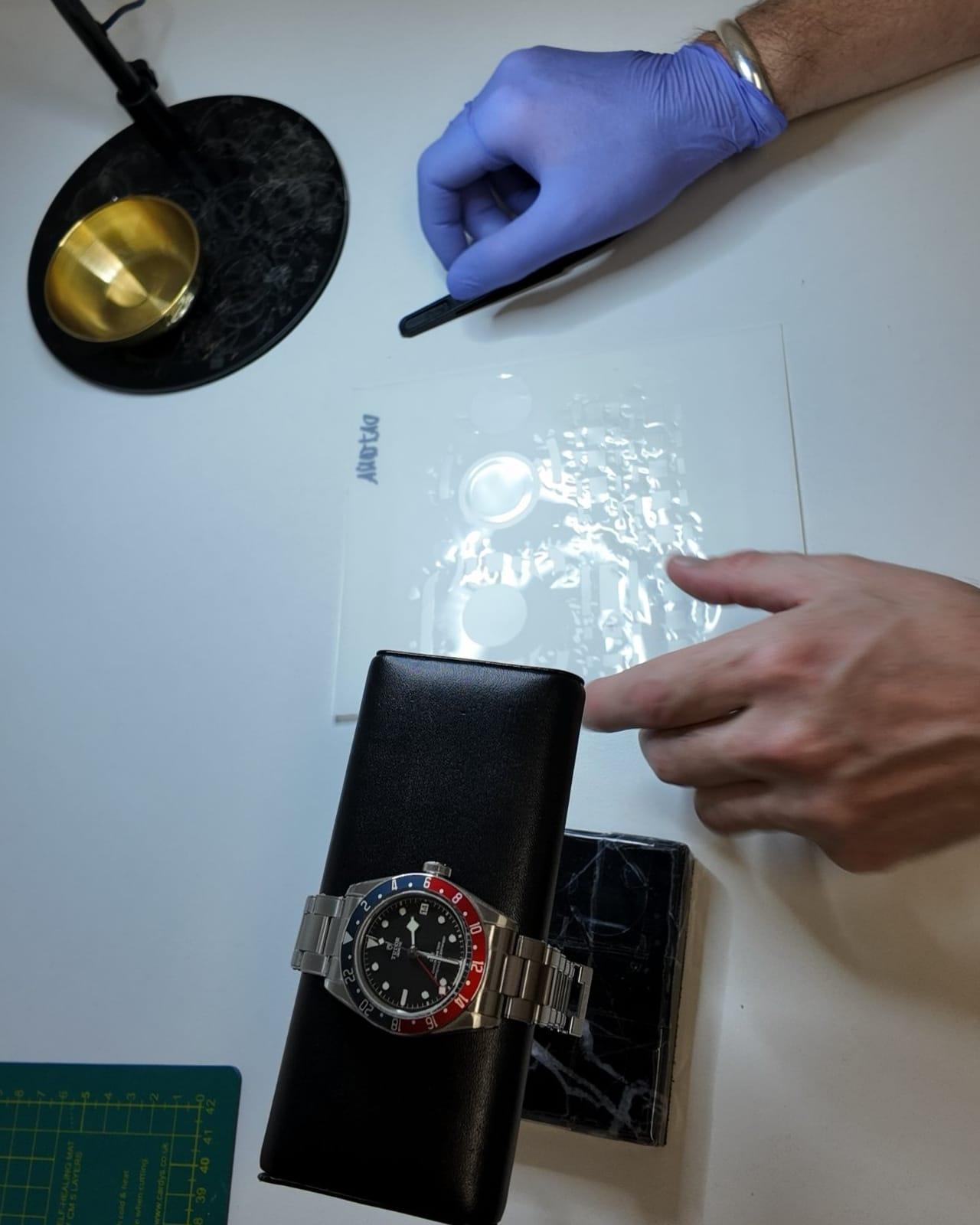
Protection film works the other way round. A clear layer sits over the surfaces that take the wear, so the desk scratches and scuffs land on the film instead of the steel. When the film wears, it is replaced. The metal underneath stays as it was on the day the film went on.
It has limits. Film is made for everyday marks. A hard knock can still dent a case or crack a crystal, and film will not hide scratches that were already there when it was fitted. If your watch is due a service, have that done first, then fit film to keep it in that state.
Does removing the film leave any trace?
The film is held by an adhesive layer designed to release cleanly. When it is lifted away, it leaves no residue on the case, bezel or bracelet. The watch is never opened, so its water resistance is unchanged, and what you see underneath is the watch exactly as it was when the film was fitted.
We recommend removing the film before you photograph a watch for sale or hand it to a dealer, so the buyer sees the metal itself. If we fitted it, we will remove it for you.
When film makes the most financial sense
Film suits some watches and owners better than others. It makes the most sense when:
- The watch is new. Fitting film before the first scratch means the case never picks up the marks a later polish would have to remove.
- You paid for originality. If you bought a pre-owned watch partly because it had never been polished, film keeps it that way while you wear it.
- You expect to sell or trade within a few years. Condition at the point of sale is what counts, and a few years of daily wear is enough to mark a clasp and bracelet.
- It is worn every day at a desk. Office wear is hard on clasps and bracelets, even for careful owners.
It makes less difference on a watch that lives in a safe, or on a case that has already been polished many times, although it will still stop new marks.
Every quote is personal to your watch, and you can see what a fitting includes on our services page.
Keep the box, papers and service history too
Condition is one part of resale value. Provenance is the other. A buyer will want to see the original box, the warranty card or certificate, and the receipts for any servicing, and dealers routinely ask for them before making an offer.
Keep them together, away from the watch, with photographs in the cloud. Check that the serial number on the papers matches the watch, and keep service paperwork that shows whether the case was refinished. The same records help with insuring your watch.
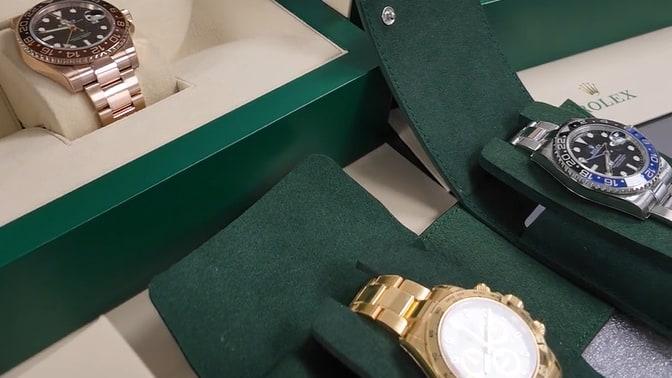
If you own a Rolex, our Rolex page shows the references we fit most often, and how to protect your Rolex from scratches shows where one marks first.
Frequently asked questions
Will a dealer know my watch has worn protection film?
Not once the film is removed. It sits on top of the metal and leaves no residue, so there is nothing to see. What a dealer will notice is the condition underneath: crisp edges, an unmarked clasp and no sign of polishing. If you prefer, you can tell them the watch was protected from new, which many buyers take as a sign of a careful owner.
Should I remove the film before I sell?
Yes, in most cases. Buyers and dealers want to see the metal itself, and a listing photographed without film shows the finish exactly as it is. If we fitted your film, we will remove it for you at the studio or during a home visit, and look over the metal underneath with you so you know exactly what the buyer will see.
Can protection film hide scratches that are already there?
No. Film protects from the day it is fitted, and it will not fill or disguise marks that are already in the metal. Light hairlines may be less noticeable under it, but deep scratches stay visible. If your watch needs a service or a refinish, have that done first, then fit film so the work you have paid for stays in that condition.
Is it worth fitting film to a watch I never plan to sell?
Many of our clients never intend to sell. They fit film because they want to wear the watch every day without wincing at each knock on a desk. Even then, condition matters: insurance valuations, a future trade, or a watch passed down in the family all depend on it. A watch that has never needed a polish keeps all of those options open.
Enquire about your watch
Tell us your watch and how you wear it, and we will reply with a quote and appointment options. You can visit our Hatton Garden studio, arrange a collection, or book a home visit.
Prefer to message? WhatsApp us on +44 7913 157321 and we will reply the same day.
Written by James, co-founder of Wrist Guard LDN, who looks after process and quality control for every watch we fit in our Hatton Garden studio.